
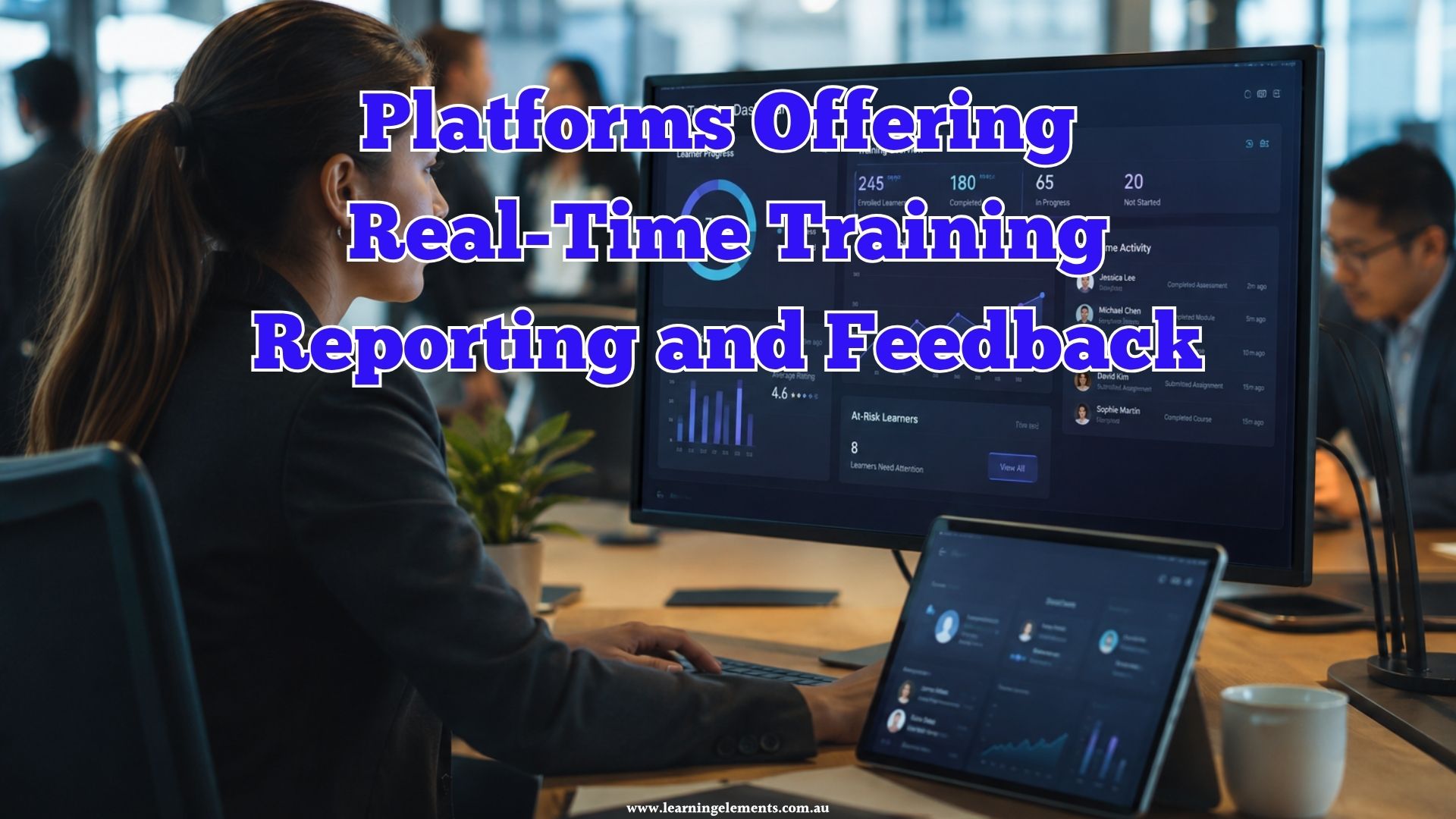
Organisations are under increasing pressure to demonstrate the effectiveness of their training programmes while responding quickly to learner needs and performance challenges. Traditional reporting methods often rely on delayed data collection, manual analysis, and retrospective reviews, making it difficult to identify issues before they affect learning outcomes. Choosing the right real-time training reporting platforms is crucial for organisations seeking immediate insight into learner progress, engagement levels, and programme effectiveness. By providing up-to-date information on learner activity and performance, these platforms enable Learning and Development teams to make informed decisions, support learners proactively, and continuously improve training delivery.
Unlike static reporting systems, real-time training reporting platforms provide instant access to training data as it is generated. This allows organisations to monitor participation, identify trends, and respond to challenges before they become larger issues.
For Learning and Development leaders, HR managers, compliance officers, and training providers, real-time visibility can significantly improve both learner outcomes and organisational performance.
Core Benefits of Real-Time Training Reporting Platforms
Implementing real-time training reporting platforms offers a range of benefits that extend beyond simple data collection.
Instant Visibility of Learner Engagement
One of the most significant advantages of real-time reporting is the ability to monitor learner engagement as it happens.
Organisations can track:
- Attendance and participation rates
- Course completion progress
- Time spent on learning activities
- Assessment performance
- Interaction with training materials
This visibility allows facilitators and managers to identify engagement issues early and take corrective action before learners fall behind.
Faster Intervention for At-Risk Learners
Real-time training reporting platforms help organisations identify learners who may be struggling with course content or disengaging from training activities.
For example, if a learner repeatedly misses sessions, fails assessments, or stops accessing course materials, the system can flag the issue immediately. Managers and facilitators can then provide additional support, coaching, or resources before performance declines further.
Continuous Feedback Loops
Traditional training programmes often rely on end-of-course evaluations, which provide feedback after learning has already occurred.
Real-time reporting platforms support continuous feedback by collecting learner responses throughout the training experience. This allows organisations to make immediate improvements rather than waiting until a programme has concluded.
Enhanced Learner Experience
When learners receive timely feedback and support, they are more likely to remain engaged and motivated.
Real-time training reporting platforms help create a more responsive learning environment where learners receive guidance, recognition, and intervention when needed. This contributes to higher completion rates and stronger learning outcomes.
How Real-Time Training Reporting Platforms Support Compliance Tracking
For organisations operating in regulated industries, compliance tracking is often an important requirement.
Real-time training reporting platforms can help organisations monitor:
- Mandatory training completion rates
- Certification status
- Assessment pass and fail results
- Attendance verification
- Refresher training deadlines
Rather than relying on manual audits or periodic reviews, organisations can access compliance data instantly and respond quickly when gaps are identified. For example, automated alerts can notify managers when certifications are approaching expiration or when employees have not completed required compliance training within designated timeframes. This level of visibility improves accountability while reducing administrative effort.
Key Strategies for Selecting Real-Time Training Reporting Platforms
1. Prioritise Real-Time Dashboards
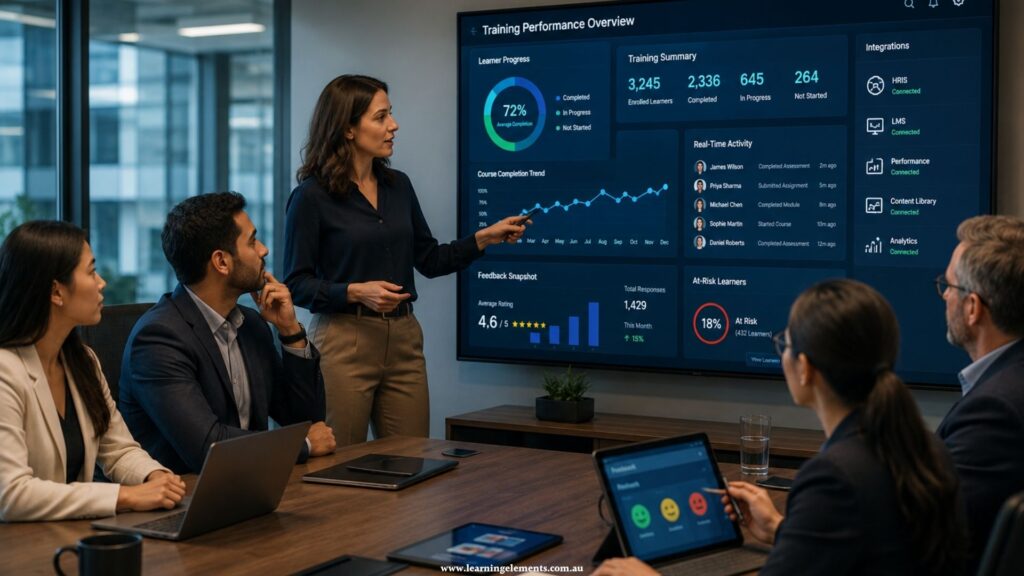
The most effective real-time training reporting platforms provide dashboards that deliver immediate visibility into learner activity and programme performance.
Look for platforms that offer:
- Live progress tracking
- Interactive data visualisations
- Role-based dashboards
- Custom reporting views
- Mobile accessibility
These features allow stakeholders to access relevant information quickly without relying on manual report generation.
For example, executives may require high-level completion statistics, while facilitators need detailed learner engagement data.
2. Enable Continuous Feedback Mechanisms
Feedback is most valuable when it can be acted upon immediately.
Real-time feedback tools such as:
- Live polls
- Knowledge checks
- Reflection activities
- Pulse surveys
- Interactive quizzes
can enhance both reporting accuracy and learner engagement.
By capturing feedback throughout the learning journey, organisations gain richer insights into learner experiences and training effectiveness.
Want to improve learner engagement with real-time reporting and feedback tools?
Explore Real-Time Reporting Solutions
3. Ensure Integration Capabilities
The value of real-time training reporting platforms increases significantly when they can connect with other organisational systems.
Platforms should integrate with:
- Human Resource Information Systems (HRIS)
- Performance management platforms
- Learning Management Systems (LMS)
- Content delivery systems
- Business intelligence tools
Integration creates a unified view of learner performance and organisational development, reducing data silos and improving decision making.
For example, organisations can combine training completion data with performance metrics to better understand the impact of learning initiatives on business outcomes.
4. Support Data-Driven Facilitation
One of the most powerful features of modern real-time training reporting platforms is their ability to support facilitators during training delivery.
Facilitators can monitor learner participation, assessment results, and engagement trends as training occurs. This allows them to adjust pacing, revisit challenging concepts, and provide targeted support based on actual learner needs.
By bridging the gap between reporting and facilitation, organisations can create more adaptive and effective learning experiences.
Example of Real-Time Training Reporting in Practice
Consider a customer service organisation delivering onboarding training to new employees across multiple locations. Before implementing a real-time training reporting platform, managers often waited until the end of training programmes to review attendance records and assessment scores. By the time issues were identified, opportunities for intervention had often passed.
After adopting a real-time reporting solution, the organisation was able to:
- Monitor attendance as sessions occurred
- Track assessment results immediately
- Identify disengaged learners early
- Provide targeted coaching during training
- Generate compliance reports automatically
As a result, learner completion rates improved, onboarding timelines were reduced, and managers gained greater visibility into workforce readiness. This enabled managers to make faster decisions, improve learner support, and maintain greater visibility across the onboarding process.
Interested in using learner analytics to improve training delivery?
Book a Learning Analytics Consultation
Data Security and Privacy Considerations
Real-time training reporting platforms collect significant amounts of learner data, including attendance records, assessment results, engagement metrics, and feedback responses.
Organisations should ensure that reporting platforms comply with relevant privacy legislation and internal data governance requirements. Access controls, secure storage practices, and role-based permissions help protect sensitive information while ensuring that stakeholders can access the data they need.
As reporting capabilities become more sophisticated, maintaining learner trust through responsible data management becomes increasingly important.
Common Challenges
While real-time training reporting platforms offer significant advantages, organisations should be aware of potential implementation challenges.
Selecting Platforms That Align with Organisational Needs
Not all platforms offer the same capabilities. Organisations should carefully assess reporting requirements, integration needs, scalability, and user experience before making a decision.
Managing Data Overload
Real-time reporting generates large volumes of data. Without clear reporting objectives and dashboard design, organisations may struggle to focus on the most meaningful metrics.
Establishing key performance indicators and reporting priorities helps ensure that data supports decision making rather than creating unnecessary complexity.
Ensuring User Adoption
The effectiveness of any reporting platform depends on consistent use.
Facilitators, managers, and learners must understand how to access, interpret, and act upon reporting data. Training, communication, and stakeholder involvement are essential for successful adoption.
Maintaining Data Quality
Real-time reporting is only as accurate as the data being collected.
Organisations should establish clear standards for attendance tracking, assessment configuration, and learner data management to ensure reporting accuracy.
Best Practices for Implementing Real-Time Training Reporting Platforms
To maximise the value of real-time training reporting platforms, organisations should:
- Define clear reporting goals before implementation
- Standardise reporting metrics across programmes
- Configure automated alerts for critical events
- Regularly review dashboard effectiveness
- Train facilitators and managers on data interpretation
- Align reporting with compliance and business objectives
- Use learner feedback to continuously improve reporting processes
These practices help ensure that reporting remains actionable, relevant, and aligned with organisational priorities.
Organisations should also ensure that reporting dashboards and analytics tools are accessible to all users, including those who rely on assistive technologies, supporting inclusive participation and decision making.
How We Help Organisations Implement Real-Time Training Reporting Platforms
Implementing real-time training reporting platforms involves more than simply purchasing software. To achieve meaningful results, organisations need the right strategy, system configuration, reporting framework, and stakeholder adoption plan.
We help organisations design and optimise training reporting frameworks that provide accurate, actionable insights while reducing administrative workload.
Our services include:
LMS Reporting Configuration and Optimisation
Many organisations use only a fraction of their reporting platform’s capabilities. We help configure dashboards, automated reports, learner tracking, and reporting workflows to maximise the value of existing systems.
Automated Training Reporting Design
Building on broader automated training reporting strategies, we help organisations create reporting processes that capture attendance, assessment, compliance, and engagement data automatically.
This reduces manual effort while improving reporting accuracy and consistency.
AI-Powered Reporting and Analytics
We support the integration of AI tools that analyse learner behaviour, identify performance trends, and generate actionable recommendations.
This enables organisations to move beyond descriptive reporting and adopt more predictive learning analytics.
Compliance Tracking and Audit Readiness
For organisations operating in regulated industries, we help establish reporting systems that support compliance monitoring, certification tracking, audit preparation, and mandatory training management.
Reporting Templates and Dashboard Development
We develop standardised reporting templates and dashboards that provide stakeholders with consistent, easy-to-understand insights across programmes, departments, and learner groups.
By combining technology, instructional design expertise, and reporting best practices, organisations can create reporting environments that support both operational efficiency and learner success.
Need help selecting and implementing the right real-time training reporting platform?
Connecting Real-Time Reporting with Broader Learning Strategies
While real-time training reporting platforms provide immediate visibility into learner activity, their greatest value is realised when they are integrated into a broader learning and development strategy.
For example, real-time reporting can support:
- Automated training reporting workflows that reduce administrative effort
-
Compliance tracking initiatives that require accurate attendance and assessment records
-
Training reporting templates that standardise stakeholder communications
-
AI-driven analytics that identify learner risk and performance trends
-
Professional development programmes that monitor long-term skill growth and learning progression
Rather than treating reporting as a standalone activity, organisations should view real-time reporting as part of a connected learning ecosystem that supports data-informed decision making at every stage of the learner journey.
When combined with automation, analytics, and strategic workforce development initiatives, real-time training reporting platforms become powerful tools for improving organisational performance and learning effectiveness.
Conclusion
The right real-time training reporting platforms empower organisations to move from reactive to proactive learning strategies. By providing immediate visibility into learner engagement, assessment performance, compliance status, and programme effectiveness, these platforms enable faster decision making and more effective interventions.
When combined with continuous feedback mechanisms, integration capabilities, and data-driven facilitation practices, real-time training reporting platforms become powerful tools for improving both learning outcomes and organisational performance.
As learning environments continue to evolve, organisations that invest in real-time reporting and feedback capabilities will be better positioned to create responsive, engaging, and impactful training experiences.
Organisations that combine real-time visibility with automated reporting, compliance tracking, and learner analytics can gain a significant advantage in both workforce development and training effectiveness.