
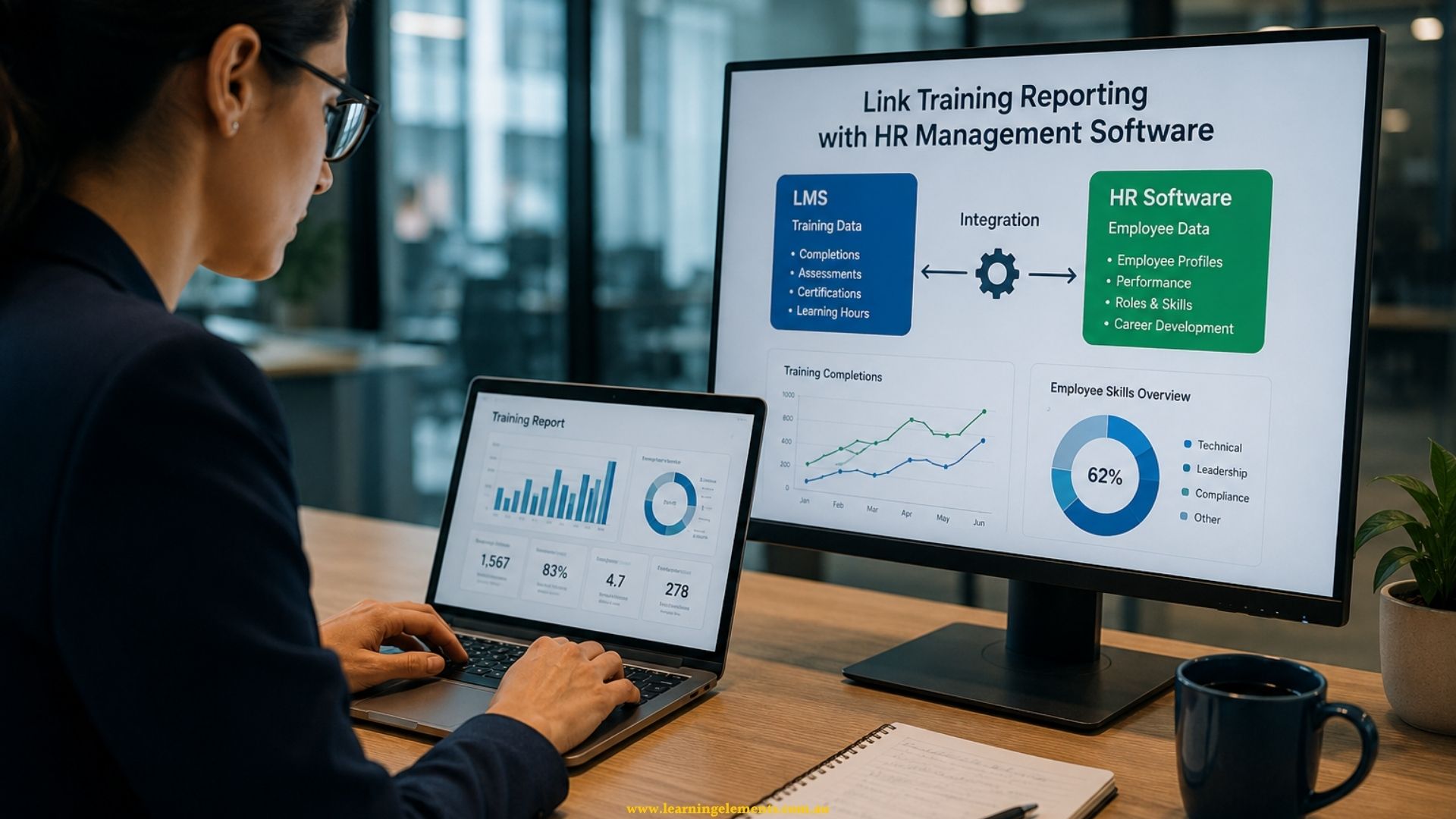
Training reporting integration with HR management software is the process of connecting your Learning Management System (LMS) or training tracker with your HR platform, so that learning data flows automatically alongside employee records, performance reviews and workforce planning information.
Organisations invest significant time and resources into employee training, yet many still struggle to connect learning outcomes with broader workforce objectives. Training data often sits within an LMS, while employee information, performance reviews, career progression and workforce planning data remain in separate HR platforms. Bringing these systems together can reduce manual administration, improve reporting accuracy and create a clearer picture of employee development, whether through native integrations, middleware platforms or custom APIs.
Without integration, valuable training information remains isolated, creating visibility gaps that make it difficult for leaders to understand how learning contributes to business performance. As Australian organisations place greater emphasis on workforce capability, leadership development, succession planning and compliance, linking training reporting with HR systems has become a critical part of effective talent management.
What Training Reporting Integration Reveals
By integrating training reporting with HR systems, organisations can answer critical questions such as:
- Which employees are ready for leadership opportunities?
- How does training impact performance outcomes?
- Where are emerging skills gaps developing?
- Which teams require additional capability development?
- Are compliance requirements being maintained across the workforce?
Instead of making decisions based on fragmented information, leaders gain access to connected workforce insights that support more informed decision-making.
The Growing Need for Connected Workforce Data
Modern organisations operate in an environment of rapid technological change, evolving workforce expectations, and increasing compliance obligations. HR leaders and learning professionals are under pressure to demonstrate measurable business value from development initiatives.
Training reporting integration with HR management software enables organisations to move beyond basic completion statistics and establish clear links between learning activities and workforce outcomes.
This shift supports:
- Better talent management decisions
- More effective workforce planning
- Improved employee development strategies
- Stronger succession planning
- Greater organisational agility
As discussed in our articles on training reporting automation and real-time training reporting platforms, reporting becomes most valuable when it supports strategic business decisions rather than simply documenting training activity.
How to Integrate Training Reporting with HR Systems
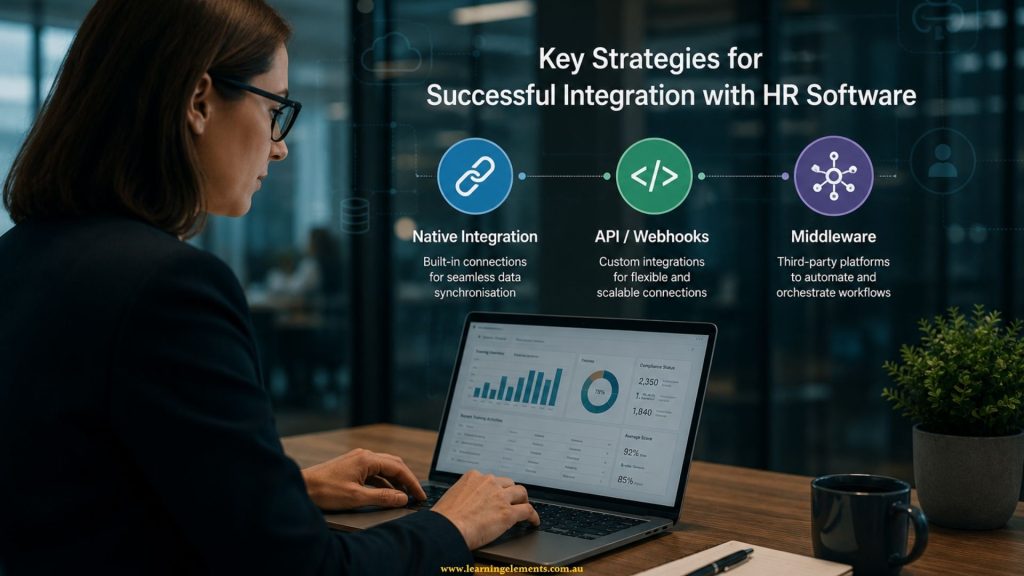
- Native Integrations: Many modern platforms (e.g., Cornerstone, BambooHR, TalentLMS) offer direct, built-in integrations.
- API/Webhooks: If your platforms don’t have a native integration, your IT team can use the systems’ APIs (Application Programming Interfaces) to build a custom, automated data bridge.
- Middleware: Platforms like Zapier or Workato allow non-technical administrators to create automated workflows (e.g., triggering a training assignment when an employee status changes to “Hired” in the HRIS).
Core Benefits of Training Reporting Integration with HR Management Software
-Unified View of Employee Development
One of the most significant advantages of integration is the ability to create a single source of truth for employee development.
Rather than accessing multiple systems to gather information, HR teams and managers can view:
- Completed training programmes
- Certifications and qualifications
- Skills development progress
- Career development activities
- Performance outcomes
This consolidated view provides greater visibility into workforce capability and employee growth.
-Improved Workforce Planning
Effective workforce planning requires accurate information about current and future capability requirements.
Integrated reporting helps organisations identify:
- Existing skill strengths
- Capability gaps
- Future workforce requirements
- Succession planning opportunities
- Leadership development needs
This information supports proactive planning rather than reactive responses to capability shortages.
-Stronger Alignment Between Training and Performance
Many organisations struggle to demonstrate how learning initiatives contribute to business outcomes.
By connecting training data with performance management systems, leaders can evaluate relationships between:
- Learning participation
- Performance ratings
- Productivity improvements
- Leadership readiness
- Employee engagement
When training and performance data are connected, organisations move from anecdotal reporting to evidence-based decisions about where learning investment delivers the greatest impact.
-Enhanced Compliance Tracking
Compliance management remains an important concern across many industries.
Integrated reporting enables organisations to monitor:
- Mandatory training completion
- Certification renewals
- Regulatory requirements
- Audit readiness
- Compliance risks
For Australian organisations operating under WHS legislation or industry-specific regulatory frameworks, automated compliance reporting reduces audit risk and administrative burden. Automated reporting also helps maintain consistent compliance records while reducing audit preparation time.
Not sure where your reporting gaps are? Talk to Learning Elements.
Key Strategies for Successful Integration with HR Management Software
1. Define Data Alignment Before Integration
Technology alone will not solve reporting challenges. Before connecting systems, organisations should establish how learning data aligns with workforce objectives and HR processes.
Important areas to align include:
-Roles and Competencies
Training programmes should support clearly defined competency frameworks.
Organisations should determine:
- Required skills for each role
- Development pathways
- Competency assessment methods
- Capability benchmarks
This allows training reports to provide meaningful insights into workforce readiness and supports more targeted capability development across the organisation.
-Performance Reviews
Learning outcomes should be linked to performance management processes wherever possible.
For example:
- Training objectives can support performance goals.
- Development activities can be tracked alongside review outcomes.
- Learning progress can inform future performance discussions.
When training reporting is integrated with HR management software, performance conversations become grounded in data rather than observation alone.
-Career Progression Pathways
Training data can provide valuable indicators of employee readiness for future opportunities.
Reporting should support visibility into:
- Promotion readiness
- Leadership potential
- Career development milestones
- Succession planning pipelines
When training and career development data work together, organisations can make more informed talent decisions.
2. Use API or System Integrations
Most modern LMS platforms and HR systems offer integration capabilities through APIs or built-in connectors. These integrations enable data to move automatically between systems, reducing manual administration and improving reporting accuracy.
Common integration approaches include:
- LMS-to-HRIS integrations
- LMS-to-performance management integrations
- Data warehouse connections
- Business intelligence reporting integrations
- Enterprise learning ecosystem integrations
Automated data exchange ensures information remains current and reduces the risk of duplicate or inconsistent records—a common problem when training reporting and HR management software operate independently.
3. Map Learning Outcomes to HR Objectives
Training becomes significantly more valuable when outcomes directly support organisational goals. Learning initiatives should be connected to measurable workforce objectives wherever possible.
Examples include:
Leadership Development and Promotion Readiness
Leadership programmes can be linked to succession planning frameworks.
Reporting can track:
- Programme completion
- Leadership competency development
- Readiness indicators
- Internal promotion rates
This helps Australian organisations build stronger leadership pipelines and identify high-potential employees earlier in their development journey.
Compliance Training and Regulatory Requirements
Mandatory training should be directly linked to compliance objectives.
Reporting can provide visibility into:
- Completion status
- Certification expiry dates
- Outstanding requirements
- Organisational risk exposure
This reduces compliance risk while simplifying audit preparation, particularly important for Australian organisations managing obligations under WHS legislation, industry licensing requirements and organisation-specific compliance requirements.
Technical Skills and Workforce Capability
Technical training can support workforce transformation initiatives.
Reporting may track:
- Skill acquisition
- Capability improvements
- Emerging workforce needs
- Department-level capability trends
This information helps leaders prioritise future development investments and respond to capability gaps before they affect business performance.
4. Leverage AI for Workforce Insights
Artificial intelligence is increasingly helping organisations extract greater value from integrated reporting data.
When training and HR information are connected, AI tools can identify patterns that may not be visible through traditional reporting methods.
Potential applications include:
-Predicting Skill Gaps
AI can analyse workforce data to help identify areas where capability shortages may emerge.
This enables organisations to:
- Anticipate future training needs
- Prioritise development programmes
- Support workforce planning initiatives
- Reduce capability risks before they escalate
-Personalised Learning Recommendations
Integrated systems can support personalised development pathways based on:
- Current role requirements
- Career aspirations
- Skills assessments
- Performance data
This creates more targeted and relevant learning experiences for employees, improving both engagement and development outcomes.
A practical AI prompt for L&D and HR teams to consider:
“Combine training and HR performance data to identify emerging skill gaps across departments and recommend priority development initiatives.”
Used appropriately, AI helps learning and HR teams move from reporting historical activity to supporting forward-looking workforce decisions.
Ready to connect your training and HR systems? We can help you build the right approach.
Common Challenges During Integration
Data Silos Between Systems
Many Australian organisations operate multiple systems implemented independently over time. These systems often contain valuable information but lack consistent integration frameworks, making it difficult to generate unified training and HR reporting.
Addressing data silos typically requires:
- Integration planning
- Stakeholder collaboration
- Data governance standards
- Technology alignment
Resolving silos is one of the most important steps in making training reporting integration with HR management software work effectively across the organisation.
Inconsistent Data Structures
Different systems may use varying naming conventions, competency frameworks, employee identifiers or reporting categories. Without proper data mapping, reporting accuracy can suffer and insights become unreliable.
Organisations should establish clear data standards before implementation to ensure consistency across systems and maintain confidence in reporting outputs.
Privacy and Governance Considerations
Training and HR data often contain sensitive employee information.
Integration projects should include:
- Data security controls
- Access permissions
- Privacy compliance requirements
- Governance frameworks
- Reporting protocols
For Australian organisations, privacy governance should also align with the Australian Privacy Principles (APPs) under the Privacy Act 1988. Strong governance protects employee information while maintaining reporting integrity across connected systems.
Key Services to Consider
Successful training reporting integration with HR management software often requires expertise across learning technology, HR systems, data management and organisational change.
Key services may include:
- LMS-HR System Integration: Technical integration between learning and HR platforms supports automated data exchange and reporting accuracy.
- Data Mapping and Governance Frameworks: Structured data frameworks ensure information remains consistent, reliable, and meaningful across systems.
- Reporting Strategy Aligned with Talent Management: Effective reporting should support workforce planning, succession management, leadership development, and organisational capability goals.
- Change Management and Stakeholder Training: New reporting processes often require adoption across multiple business functions. Training and communication help stakeholders understand how to use integrated reporting effectively and consistently.
Conclusion
Training reporting integration with HR management software is not simply a technology initiative. It is a strategic approach that connects employee development with workforce planning, performance management, compliance, and organisational capability.
As organisations continue investing in leadership development, workforce transformation, and future skills, integrated reporting provides the visibility required to make better talent decisions. When learning data is connected to broader HR insights, organisations can move beyond tracking training activity and begin measuring workforce impact.
At Learning Elements, we help organisations design learning and reporting strategies that align with business goals, workforce capability requirements, and long-term organisational performance. Through instructional design, leadership development, learning technology consulting, and reporting strategy development, we support organisations in building training systems that generate meaningful and actionable insights.
Contact Learning Elements to discuss how integrated training reporting can support your talent management and organisational development objectives.