


Bite-Sized Learning Is Rising. Here’s What It Means for Capability Development and Organisational Performance
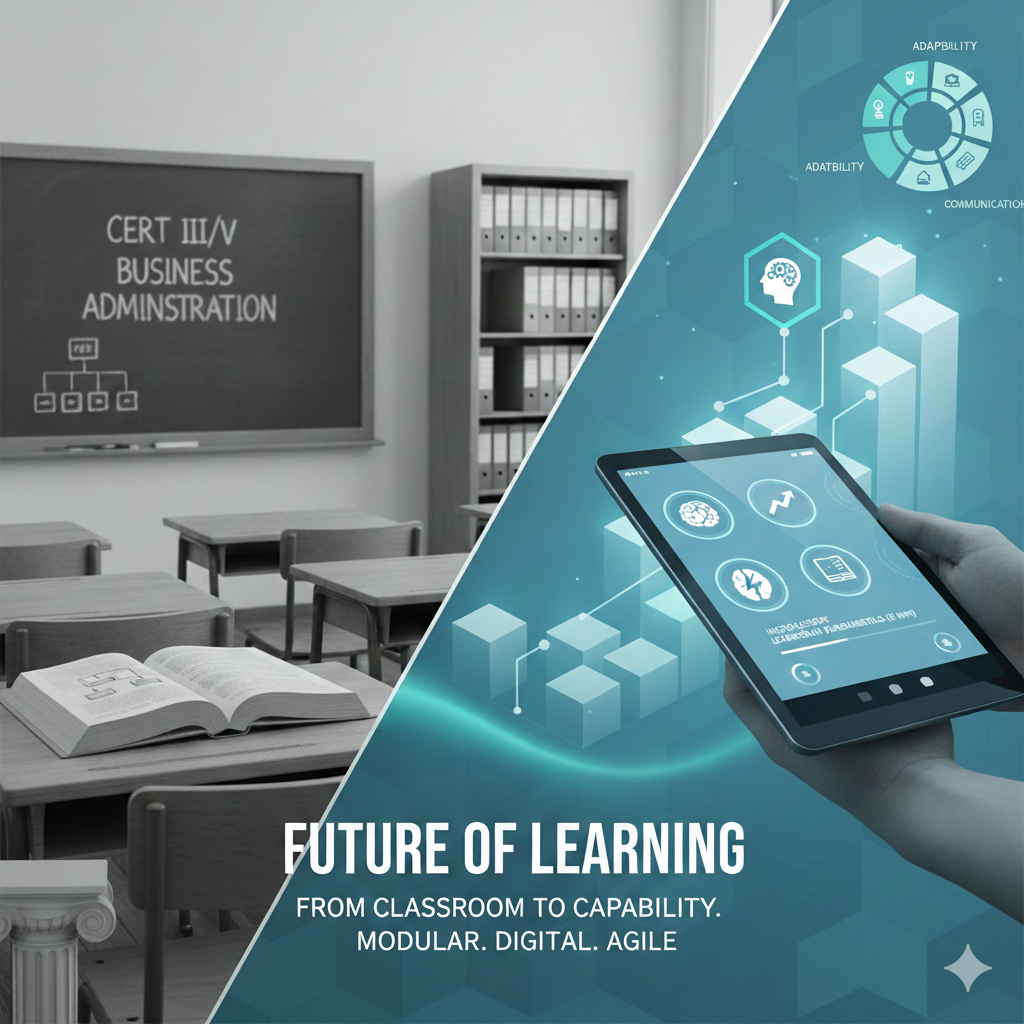
“We’re seeing fewer Cert III and IV enrolments. Clients are asking for shorter, modular programs instead.”
– Comment from a training provider during a recent conversation.
It’s a pattern that’s becoming hard to ignore. It’s the third time I have heard something similar in two weeks.
From vocational training to corporate L&D, long-form qualifications are being traded for shorter, more flexible alternatives: micro-credentials, skill sets, short courses, and modular learning. For many, it’s about speed, agility, and fitting learning into modern workflows. But as this shift gains ground, it raises a deeper set of questions:
- What happens to capability when learning gets smaller?
- Are people learning more on the job or just skipping over learning altogether?
- And how should organisations adapt, track, and build coherent workforce skills in a modular world?
As leaders, developing our people contributes directly to organisational growth, so the stakes are high.
Let’s unpack what the evidence says and where this trend may be heading.
Formal Training Isn’t Dead, But It’s No Longer the Default
In Australia’s VET sector alone, more than 2.6 million students have completed stand-alone subjects, “subject bundles” not tied to full qualifications. That’s a massive uptake. (NCVER, 2021).
And in corporate L&D, the same pattern plays out, long courses replaced by just-in-time learning, short modules, mobile content, micro learning and ‘lunch & learns’.
It’s not simply about cost or convenience. This shift represents changing workforce habits (shorter attention spans, digital-first learners), pressure for faster upskilling and generational expectations for flexibility, choice, and autonomy.
This isn’t just about delivering training differently, we’re looking strategically at how, when and even what learning means in the future.
Why Bite-Sized Learning Works When Done Well
This trend has real learning science behind it.
A recent analysis across 15,000+ learners found microlearning significantly improved retention and learning outcomes compared to traditional formats. Similar studies show strong learner engagement, better post assessment scores, and higher completion rates for shortform content, especially when paired with spacing, reflection, and immediate application.
Why it works:
- Cognitive load reduction: Smaller chunks = better focus and less overwhelm
- Spaced repetition: Builds retention more effectively than one-off intensives
- Higher accessibility: Mobile-friendly, low-barrier
- On-the-job alignment: Learners apply content quickly and regularly, reinforcing learning
In corporate settings, microlearning often performs better than traditional training, if the content is relevant, well-designed, and part of a larger development plan and if it is supported by leaders regularly and ongoing.
But those “if’s” matter.
The Trade-Offs: What Gets Lost When Learning Goes Micro
There’s growing evidence and practitioner experience that microlearning doesn’t guarantee meaningful capability.
Microlearning works well for:
- Discrete knowledge (e.g. compliance updates, product features)
- Quick skills (e.g. using a tool, soft skill refreshers)
- Foundation modules in a larger pathway
But its limitations emerge when:
- There’s no broader learning plan or integration
- Deep capability (judgment, decision-making, systems thinking) is required
- Learners accumulate badges but can’t demonstrate workplace application
As one colleague put it: “Microlearning increases participation, but may not lead to transformation.”
This is the risk: a collection of fragments that don’t add up to full capability. Lots of ‘achievements’ unlocked but no real progress in the game.
What This Means for Organisations
The upside is clear:
- Agility: Teams can upskill faster, in response to change
- Efficiency: Learning is embedded into work, not separate from it
- Scale: Short modules are easier to roll out, update, and localise
But without strategy and structure, organisations may face:
- Capability development blind spots: Gaps in foundational knowledge or soft skills
- Tracking challenges: Learning happens everywhere, but it’s hard to measure
- Development drift: Learners choose what’s interesting, not what’s strategic
Put simply: microlearning is efficient. But efficient isn’t the same as effective unless it’s aligned with broader workforce development goals and personal motivation.
The critical shift for leaders and organisations? Moving from offering training to managing learning strategy.
That means:
- Building stackable pathways (not standalone modules)
- Linking short courses to clear competency frameworks
- Tracking progress across providers and formats
- Ensuring short form learning supports long term role capability
- Managing workforce planning, consistency and compliance
The Visibility Problem: When Learning Gets Smaller, Tracking Gets Harder
In traditional training, visibility was simple: you knew who had a qualification, and when.
In a modular world, learning happens across apps, platforms, formats. Some programs are credentialed, others informal and learners might complete 10 micro courses but how well is it tracked?
This creates a capability fog: leaders can’t see what skills exist, what’s developing or where gaps sit, especially when learning is self-directed and fragmented. Consider this impact on planning and deliverables, such as resource planning and regulatory deadlines, not just visibility and reporting.
If the future of learning is modular, the future of tracking and visibility needs to be unified.
This shift also puts more emaphasis on learning analytics. Individual systems (LMS, CRM, authoring tools, quality and compliance reports, WFM etc) play a role, but for a true strategic understanding we need tools like TIM, the Training Intelligence Model.
They help:
- Map diverse learning inputs against business objectives
- Track learning over time, not just completion rates
- Provide reporting clarity across disconnected learning sources
As modular learning grows, learning intelligence becomes part of strategy, not just compliance.
What’s Next: Microlearning as a Building Block, Not a Shortcut
Looking through the fog, some trends look clear:
- Micro credentials will keep expanding, especially in fast-changing sectors
- Hybrid models will emerge: combining foundational programs with modular top ups
- “Stackability” will matter more than ever: systems that connect short courses into recognised capability pathways that give visibility to planning and forecasting
- Data intelligence systems will become essential infrastructure: not just for tracking, but for real understanding and shaping strategy
The most forward-thinking organisations won’t abandon traditional learning they’ll layer and sequence it.
Short, sharp learning. Long, deep capability.
Final Thought
It’s not about going short. It’s about going smart.
Microlearning offers real value agility, engagement, responsiveness, but it only delivers impact when part of a coherent system that connects learning to capability, role-readiness, and performance and learning analytucs are effectively managed.
If you’re seeing this shift or struggling to understand training effectiveness, act before capability becomes too fragmented to manage or measure.


About Post Author
