


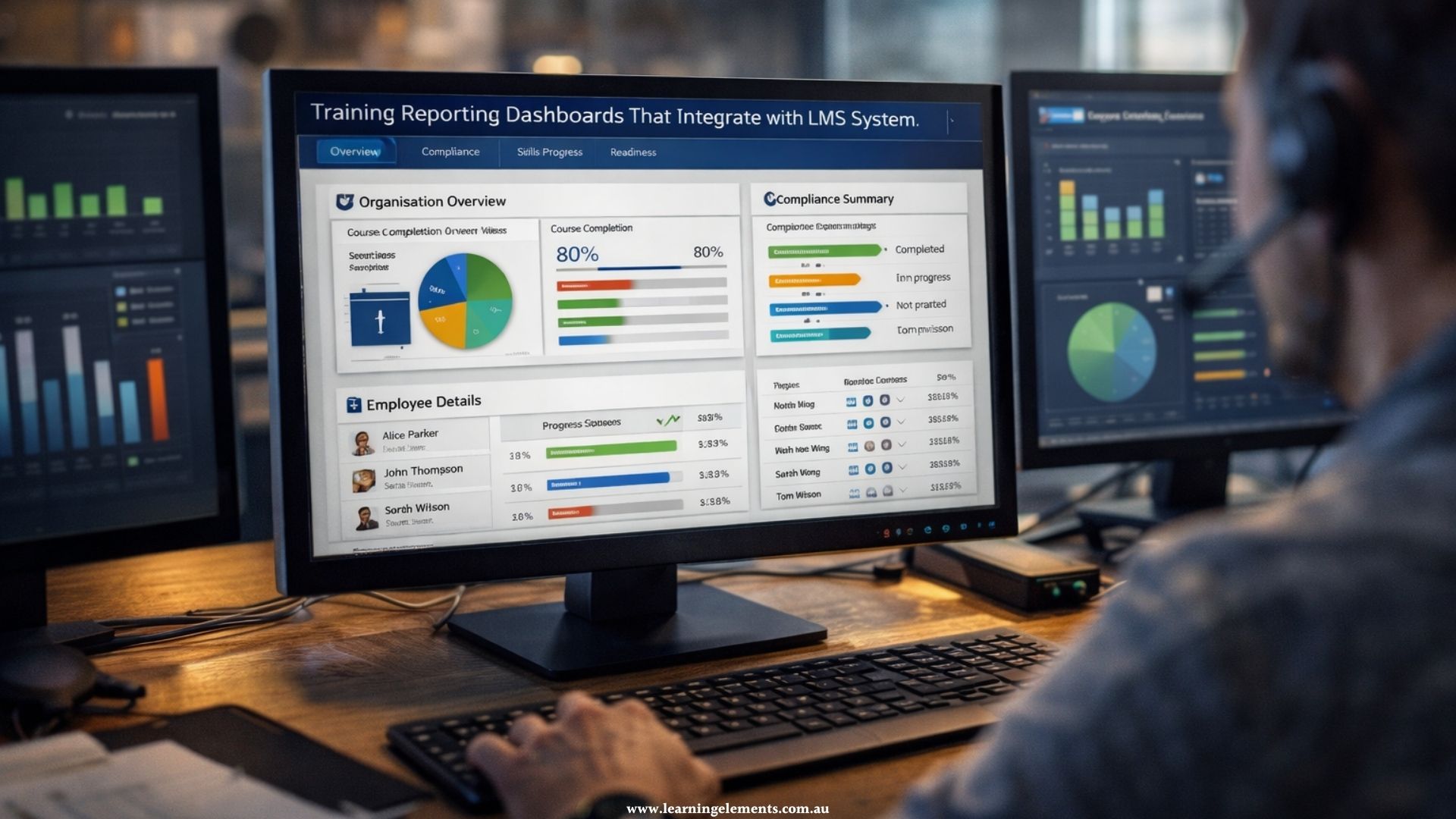
Training Reporting Dashboards That Integrate with LMS Systems
As organisations place increasing emphasis on compliance, capability, and learning impact, training data alone is no longer sufficient. What leaders need is clear, real-time visibility into learning activity, compliance status, and workforce readiness. Training reporting dashboards that integrate with LMS systems provide this visibility by turning learning data into meaningful, decision-ready insights.
This article explores what training reporting dashboards are, how they integrate with LMS systems, the types of dashboards available, a structured approach to selection, common challenges, best practices, future trends, and how Learning Elements can support organisations in designing effective, integrated reporting solutions.
Why Training Reporting Dashboards Matter
Learning Management Systems are effective at delivering and tracking training, but raw LMS reports are often:
- Data-heavy
- Difficult to interpret
- Limited to course-level activity
Training reporting dashboards address this gap by consolidating LMS data into visual, role-based views that support oversight, compliance, and strategic decision-making.
Well-designed dashboards enable organisations to:
- Monitor training and compliance status in real time
- Identify skills gaps and risk areas
- Track progress against organisational learning objectives
- Provide managers and leaders with actionable insight
For Australian organisations operating in regulated or complex environments, LMS-integrated dashboards are important for accountability, and audit readiness.
How Training Reporting Dashboards Integrate with LMS Systems
Training reporting dashboards typically integrate with LMS platforms in one or more of the following ways:
- Native LMS dashboards, built into the LMS
- LMS reporting modules or add-ons
- External dashboards connected via data feeds or APIs
Integration allows dashboards to pull data such as:
- Course completion and progress
- Assessment results
- Certification and licence status
- Training assignment by role or location
This integration ensures dashboards reflect accurate, up-to-date learning data without manual intervention.
For a broader view of compliance-focused reporting tools, see our related article:
“Where to find training reporting tools with compliance tracking”
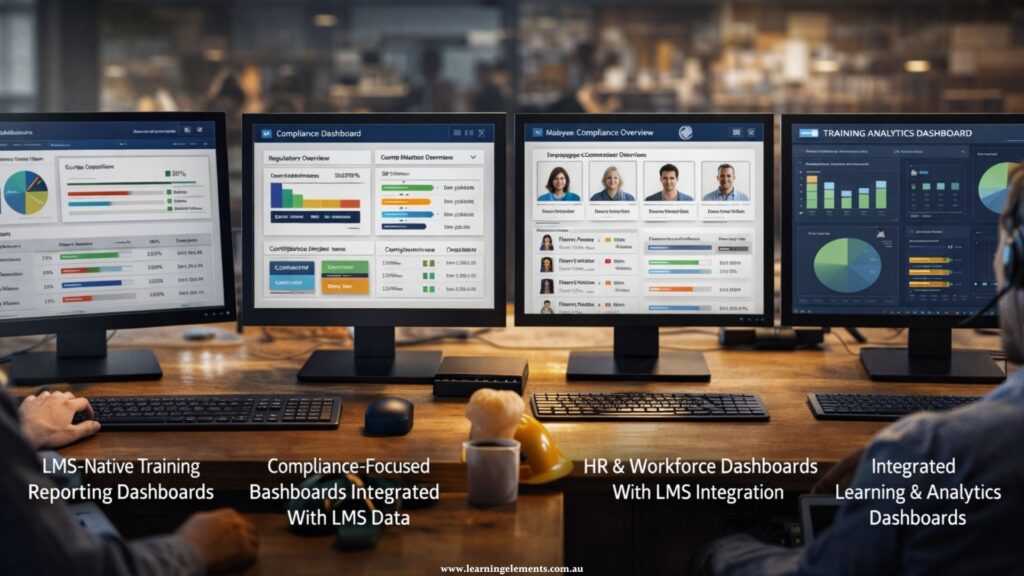
Types of Training Reporting Dashboards Available to Organisations
1. LMS-Native Training Reporting Dashboards
Many LMS platforms include built-in dashboards designed to visualise learning data.
Typical features include:
- Completion and progress charts
- Compliance status views
- Learner and course-level reporting
These dashboards are suitable for organisations with straightforward reporting needs but may be limited in customisation.
2. Compliance-Focused Dashboards Integrated with LMS Data
Some dashboards are designed specifically to visualise compliance-related LMS data.
Common capabilities include:
- Mandatory training status by role or site
- Certification and expiry tracking
- Audit-ready reporting views
These dashboards are particularly valuable in regulated environments.
This approach aligns closely with the framework outlined in:
“Training reporting tools with compliance tracking”
3. HR and Workforce Dashboards with LMS Integration
HR platforms often provide dashboards that integrate LMS data with workforce information.
Strengths include:
- Alignment with employee records
- Role-based compliance and training views
- Workforce-level reporting
These dashboards support organisational oversight but often require instructional design expertise to ensure learning quality is reflected accurately.
4. Integrated Learning and Analytics Dashboards
More advanced organisations use enterprise dashboards that integrate LMS data with HR, risk, and performance systems.
Benefits include:
- Cross-system visibility
- Executive-level insights
- Customisable, role-specific views
This approach offers the greatest flexibility but requires strong data governance and design.
Not sure which type of training reporting dashboard is right for your organisation?
Understanding the differences between LMS-native dashboards, compliance-focused views, HR-integrated reporting, and enterprise analytics solutions is important to selecting the right approach. A structured evaluation can help ensure your dashboard supports compliance, learning visibility, and decision-making without unnecessary complexity.
The Structured Approach to Selecting LMS-Integrated Training Reporting Dashboards
To ensure dashboards deliver value rather than complexity, organisations should follow a structured approach.
Step 1: Define Reporting and Compliance Requirements Clearly
Organisations should identify:
- Regulatory and compliance obligations
- Mandatory training and certification requirements
- Reporting expectations for audits and governance
Clear requirements prevent over-investment in dashboards that exceed actual needs.
Step 2: Align Dashboards to Roles and Decision-Making
Dashboards should support different users, including:
- L&D teams monitoring learning effectiveness
- Managers tracking team compliance and progress
- Executives reviewing risk and readiness
- Auditors seeking evidence and traceability
Role-based design ensures relevance and usability.
Step 3: Assess Automation and Data Refresh
Effective dashboards should:
- Update automatically from LMS data
- Reduce manual reporting effort
- Provide near real-time visibility
Automation reduces error and improves trust in the data.
Step 4: Ensure Accessibility and Localisation
Dashboards should be:
- Accessible to diverse users
- Clear in language and visual design
- Suitable for Australian regulatory and organisational contexts
Accessibility ensures insights can be acted on consistently.
Step 5: Plan for Integration and Scalability
Dashboards must be able to:
- Integrate with existing LMS and HR systems
- Scale as training and compliance needs evolve
- Adapt to new reporting requirements
Common Challenges with LMS-Integrated Training Dashboards
While training reporting dashboards that integrate with LMS systems offer significant value, many organisations encounter challenges that limit their effectiveness. These challenges are rarely caused by technology alone. More often, they stem from data governance, instructional design alignment, and organisational ownership issues.
Understanding these challenges is essential to ensuring dashboards support meaningful decision-making rather than becoming underused or mistrusted.
Fragmented or Inconsistent Data
Poor LMS configuration or disconnected systems undermine dashboard accuracy.
One of the most common challenges with LMS-integrated training dashboards is fragmented or inconsistent data. This typically occurs when LMS platforms are poorly configured, data standards are unclear, or multiple systems are used without effective integration.
Common causes include:
- Inconsistent course structures or naming conventions
- Incomplete or inaccurate learner records
- Disconnected LMS, HR, and workforce systems
- Manual data uploads or workarounds
When dashboards pull data from inconsistent sources, the resulting reports can show conflicting or unreliable information.
Impact on organisations: Inaccurate dashboards undermine confidence in training data, increase audit risk, and force teams to rely on manual checks or parallel reporting processes. Over time, this reduces trust in dashboards and limits their strategic value.
Over-Reliance on Completion Metrics
Many training dashboards focus heavily on course completion rates because these metrics are easy to track and report. However, completion alone does not demonstrate learning effectiveness, capability, or readiness to perform safely and competently.
Common limitations include:
- No visibility into assessment quality or learning outcomes
- Lack of insight into skill development or behavioural change
- Inability to distinguish between attendance and understanding
Dashboards that focus only on completion can create a false sense of compliance or capability.
Impact on organisations: Leaders may assume training objectives have been met when important skill gaps still exist. This is particularly risky in regulated or high-risk environments, where demonstrated competence is more important than attendance.
Limited Manager Engagement
Even well-designed dashboards can fail if managers do not actively use them. This often occurs when dashboards are overly complex, poorly explained, or not aligned with managers’ day-to-day responsibilities.
Common barriers to engagement include:
- Too many metrics without clear priorities
- Technical or L&D-centric language
- Dashboards that are difficult to interpret quickly
- Lack of guidance on how to act on the data
If dashboards require significant effort to understand, managers may disengage entirely.
Impact on organisations: Without manager engagement, early warning signs of non-compliance or learning gaps are missed. This limits timely intervention, reduces accountability, and places greater pressure on L&D or HR teams to manage compliance centrally.
Governance and Ownership Gaps
Training reporting dashboards require ongoing governance, but many organisations treat dashboards as a one-off implementation rather than a living system.
Common governance issues include:
- Unclear ownership of dashboard maintenance
- No defined process for updating metrics or thresholds
- Limited alignment with changing regulatory or organisational priorities
- Lack of accountability for data quality
Without ownership, dashboards can quickly become outdated or misaligned with current learning and compliance needs.
Impact on organisations: Outdated dashboards reduce confidence, fail to support decision-making, and may even present inaccurate compliance status. Over time, dashboards risk becoming ignored or replaced by manual reporting.
Why Addressing These Challenges Matters
For organisations investing in LMS-integrated training dashboards, these challenges directly affect:
- Compliance assurance
- Audit readiness
- Learning effectiveness
- Manager accountability
- Strategic workforce planning
Addressing them requires more than technical fixes. It requires intentional design, clear governance, and alignment between learning strategy, systems, and organisational roles.
This is where expert support and a structured approach become crucial to ensuring dashboards deliver long-term value rather than short-term visibility.
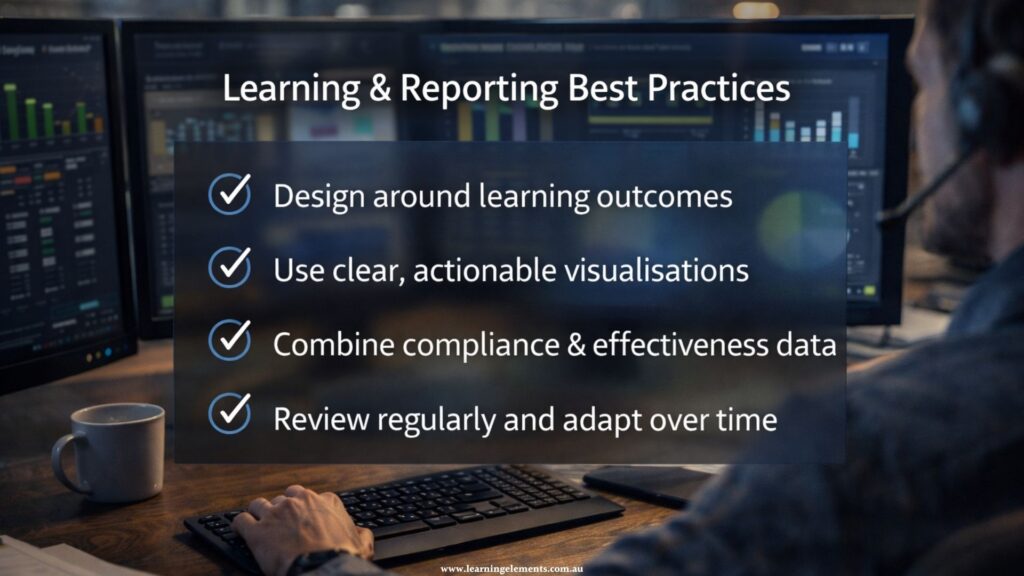
Best Practices for Effective Training Reporting Dashboards
- Design dashboards around learning outcomes, not just activity
- Use visualisations that support quick interpretation
- Combine compliance data with learning effectiveness indicators
- Review dashboards regularly as programmes and regulations change
For deeper insight into measuring progress, see:
“How to create automated training reports for employee progress”
How Learning Elements Can Support You
Designing training reporting dashboards that integrate effectively with LMS systems requires more than technical setup. It requires alignment between instructional design, compliance needs, data structure, and organisational goals.
Learning Elements supports organisations by:
- Advising on LMS and dashboard integration options
- Designing learning programmes with measurable outcomes
- Configuring dashboards for compliance, oversight, and decision-making
- Ensuring accessibility, inclusion, and localisation
- Turning LMS data into meaningful, actionable insight
Whether you are refining existing dashboards or designing new reporting capabilities, Learning Elements helps ensure your learning data supports both compliance and performance.
Need expert guidance designing or integrating training reporting dashboards with your LMS?
Learning Elements works with organisations to design reporting dashboards that align learning data, compliance requirements, and organisational goals. Whether you are refining existing dashboards or building new LMS-integrated reporting capability, our specialists can help you create dashboards that are clear, accessible, and decision-ready.
Future Trends
Predictive Learning and Compliance Analytics
Dashboards will increasingly forecast:
- Non-compliance risk
- Skills gaps
- Workforce readiness
Skills-Based and Capability Dashboards
Organisations are moving beyond courses towards:
- Skills frameworks
- Capability heat maps
- Ongoing readiness indicators
Deeper Integration with Risk and Governance
Learning dashboards will connect more closely with:
- Enterprise risk management
- Governance and assurance reporting
- Executive and board-level oversight
Increased Personalisation
Dashboards will deliver:
- Role-specific insights
- Tailored alerts
- Action-oriented views
Conclusion
Training reporting dashboards that integrate with LMS systems provide organisations with the clarity and oversight needed to manage learning, compliance, and capability effectively. When designed thoughtfully, they turn LMS data into insight that supports accountability, decision-making, and continuous improvement.
By combining the right technology with strong instructional design and reporting strategy, organisations can ensure their dashboards are not just informative, but genuinely valuable.
If you are ready to strengthen your training reporting capability and make better use of your LMS data, a structured, expert-led approach is the best place to start.
Ready to turn your LMS data into clear, actionable insight?
If your organisation is looking to move beyond basic LMS reports and build training reporting dashboards that support compliance, visibility, and continuous improvement, now is the time to take a structured, expert-led approach.
FAQs
A training reporting dashboard is a visual interface that presents learning and compliance data, often integrated with an LMS.
No. Dashboards complement LMS reports by making data easier to interpret and act on.
Yes. Many dashboards scale effectively and can be configured to suit organisational size and complexity.
AI is not essential but can enhance insight, forecasting, and summarisation when used responsibly.


About Post Author
