


Where to Find Training Reporting Tools with Compliance Tracking
Training reporting and compliance tracking tools can be found across several categories of learning and workforce systems. The right choice depends on organisational size, risk profile, and learning strategy.
How Training Reporting Tools Support Compliance and Organisational Oversight
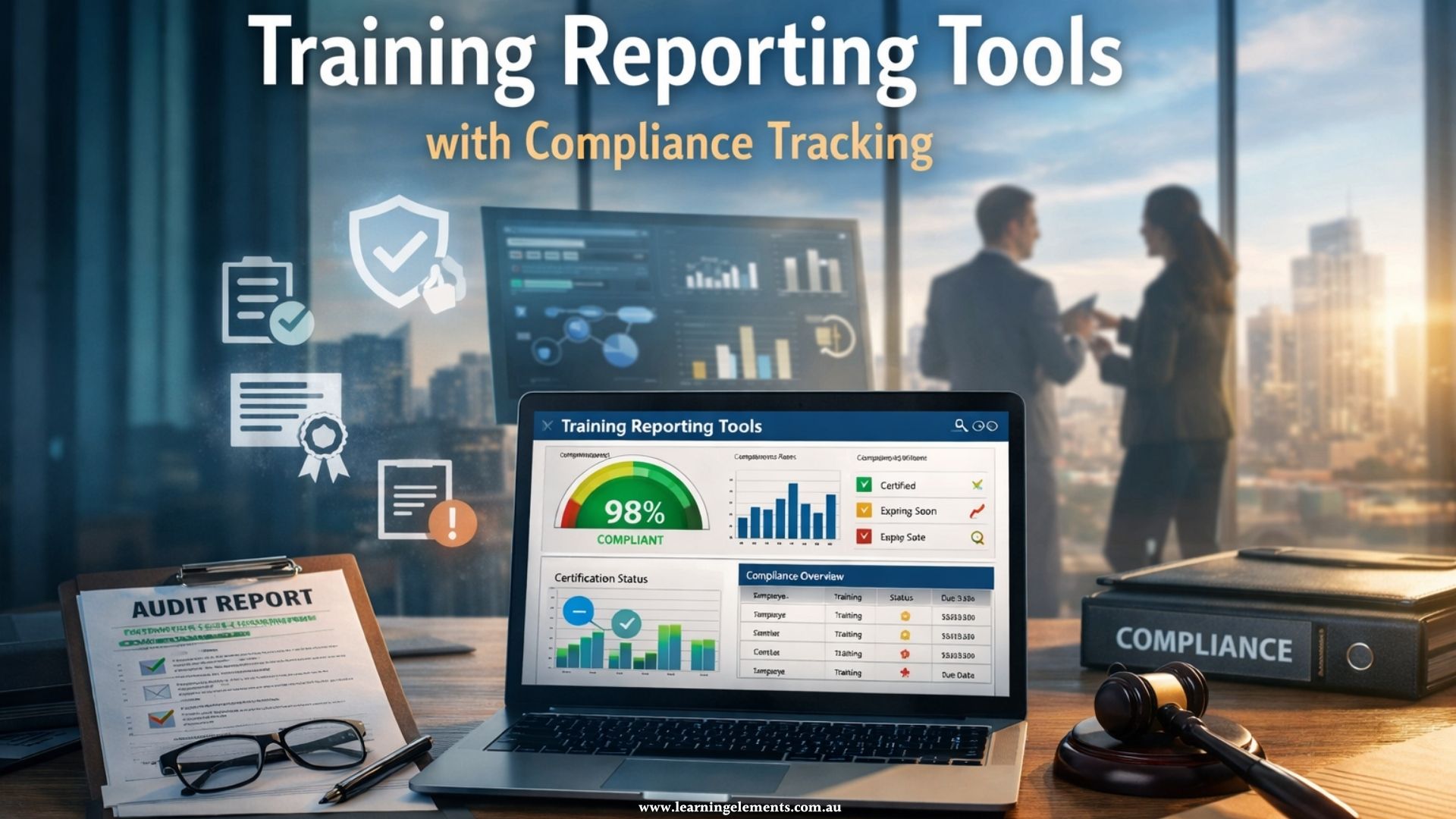
Training reporting tools provide organisations with a centralised way to track, monitor, and evidence learning activity, particularly where compliance is critical. Rather than relying on manual records or disconnected systems, these tools consolidate training data into clear, audit-ready reports.
At a minimum, effective training reporting tools enable organisations to:
- Monitor mandatory training completion and status in real time
- Track certifications, licences, and expiry dates
- Assign training requirements by role, location, or risk level
- Generate reports for audits, regulators, and internal governance
Beyond compliance, training reporting tools also support better decision-making by giving Learning & Development, HR, and operational leaders visibility into training effectiveness and workforce readiness.
For Australian organisations operating in regulated environments, selecting the right training reporting tools is essential to reducing risk, maintaining accountability, and ensuring learning requirements are met consistently across the workforce.
Types of Training Reporting Tools Available to Organisations
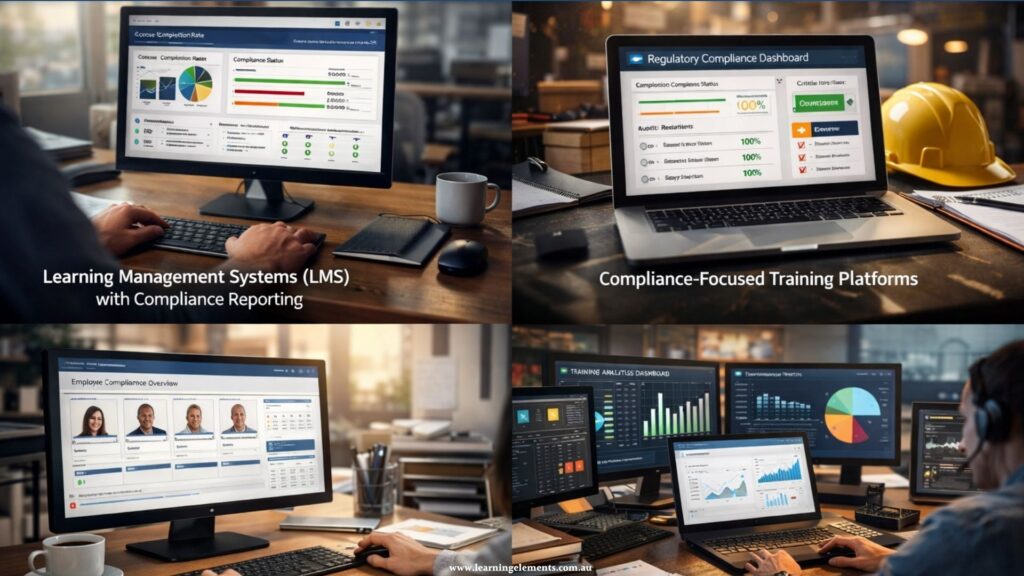
1. Learning Management Systems (LMS) with Built-In Compliance Reporting
Most modern LMS platforms include compliance tracking as a core feature.
Typical capabilities include:
- Mandatory course assignment by role or location
- Automated reminders for incomplete or expiring training
- Certification and licence tracking
- Audit-ready reporting and export options
These platforms are well suited to organisations that need centralised learning delivery and compliance oversight.
2. Compliance-Focused Training Platforms
Some systems are purpose-built for compliance-heavy industries.
These tools often provide:
- Pre-configured compliance workflows
- Regulatory-aligned reporting templates
- Strong audit and evidence management features
They are particularly common in highly regulated sectors but may offer less flexibility for broader learning design.
3. HR and Workforce Management Systems with Learning Modules
Many HR platforms include learning or compliance tracking modules.
Strengths include:
- Integration with employee records
- Role-based compliance assignment
- Reporting linked to workforce data
However, these systems often require instructional design support to ensure learning quality and reporting accuracy.
4. Integrated Learning and Analytics Solutions
Advanced organisations use integrated ecosystems, combining:
- LMS platforms
- HR systems
- Business intelligence or analytics tools
This approach enables richer compliance dashboards and enterprise-level reporting, but requires careful design and governance.
Not sure which training reporting tools best fit your compliance needs?
The Structured Approach to Selecting Compliance Reporting Tools
To ensure training reporting tools with compliance tracking deliver real organisational value, organisations should follow a structured, risk-aware selection framework. This approach helps ensure tools support not only compliance obligations, but also learning governance, reporting accuracy, and long-term scalability.
Step 1: Define Compliance Requirements Clearly
Purpose of this step: To establish what the organisation must comply with before evaluating tools.
Organisations should begin by identifying all relevant:
- Regulatory and legislative obligations
- Industry or professional standards
- Internal governance and policy requirements
- Mandatory training and certification expectations
This includes understanding:
- Which training is legally required
- How often recertification is needed
- What evidence must be retained for audits
- How long records must be stored
Why this matters: Without clearly defined requirements, organisations risk selecting tools that are either:
- Too basic to meet audit expectations, or
- Overly complex and costly for actual compliance needs
Clear requirements provide a solid foundation for tool selection and configuration.
Step 2: Align Reporting to Roles and Risk
Purpose of this step: To ensure compliance reporting supports accountability at every level of the organisation.
Effective training reporting tools must reflect organisational structure and risk exposure. This means ensuring the system can:
- Assign mandatory training by role, site, business unit, or risk category
- Distinguish between high-risk and low-risk roles
- Provide role-appropriate reporting views
For example:
- L&D teams need visibility of completion trends and gaps
- Managers need real-time insight into their team’s compliance status
- HR needs organisation-wide compliance oversight
- Auditors need clear, verifiable evidence
Why this matters: Compliance is a shared responsibility. Reporting tools must support informed decision-making without overwhelming users with irrelevant data.
Step 3: Assess Automation and Alerts
Purpose of this step: To reduce compliance risk through automation rather than manual follow-up.
When evaluating tools, organisations should look for functionality that can:
- Automatically track course completion and certification status
- Monitor expiry dates and renewal cycles
- Send automated reminders to learners
- Escalate overdue compliance issues to managers
Automation reduces reliance on spreadsheets, emails, and manual tracking.
Why this matters: Manual compliance tracking increases the likelihood of missed deadlines, inconsistent records, and audit exposure. Automated alerts create a proactive compliance environment.
Step 4: Ensure Accessibility and Localisation
Purpose of this step: To ensure compliance reporting is usable, inclusive, and contextually appropriate.
Training reporting tools should produce reports that are:
- Accessible to all users
- Suitable for Australian regulatory contexts
- Clear and consistent in language and format
Why this matters: Compliance reporting only reduces risk if stakeholders can understand and act on the information presented.
Step 5: Plan for Integration and Scalability
Purpose of this step: To ensure compliance reporting tools remain effective as the organisation grows or changes.
Organisations should assess whether tools can:
- Integrate with existing LMS platforms
- Connect with HR or workforce management systems
- Support future compliance requirements and workforce expansion
Scalability includes:
- Adding new compliance requirements
- Supporting additional locations or roles
- Increasing reporting sophistication over time
Why this matters: Compliance obligations evolve. Tools must be able to adapt without requiring complete system replacement.
Common Challenges in Compliance Training Reporting
Even with the right tools, organisations face recurring challenges when managing compliance training reporting.
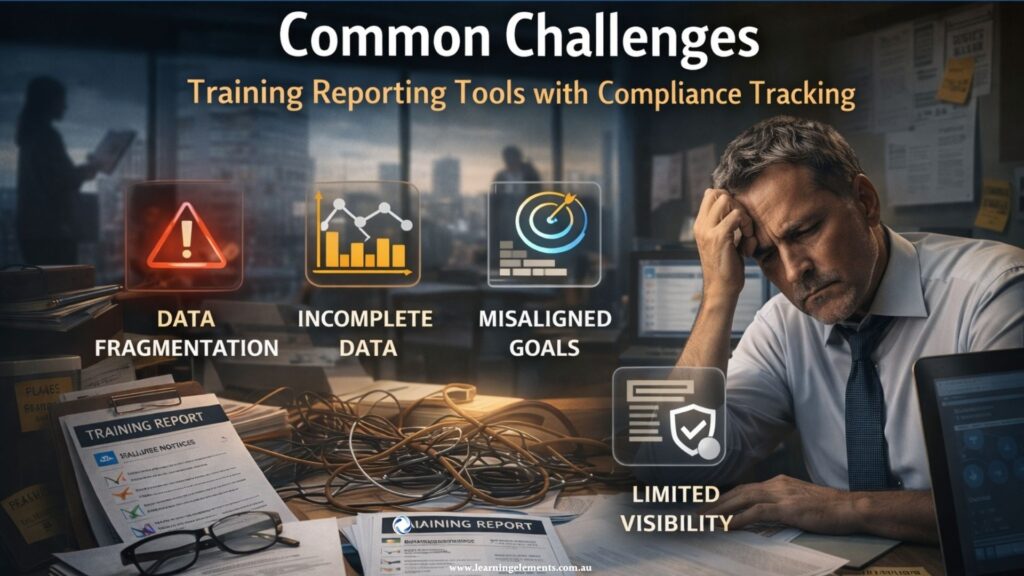
1. Fragmented Systems and Incomplete Data
Using multiple disconnected platforms, or systems that are poorly integrated, makes it difficult to produce accurate and complete compliance reports. This often results in gaps, duplicated records, or missing evidence.
Impact: Increased audit risk, duplicated effort, and unreliable compliance data.
2. Over-Reliance on Completion Data
Completion alone does not always demonstrate competence, understanding, or readiness to perform safely and compliantly. When reporting focuses only on course completion, critical learning gaps can remain hidden.
Impact: False confidence in compliance status and overlooked capability risks.
3. Misaligned Goals and Poor Configuration Governance
When compliance reporting is not aligned with organisational risk priorities, regulatory requirements, or learning outcomes, reports lose strategic value. This is often compounded by incorrect rules, tracking settings, or role assignments.
Impact: Loss of trust in compliance data and reporting that does not support decision-making.
4. Limited Visibility for Managers
Managers may not have access to timely, meaningful, or role-relevant compliance insights. Without clear visibility, it becomes difficult to intervene early or support employees effectively.
Impact: Delayed intervention, increased non-compliance risk, and reduced accountability.
How Learning Elements Can Support You
Selecting and implementing training reporting tools with compliance tracking requires more than purchasing software. It requires alignment between learning design, compliance requirements, system configuration, and reporting strategy.
Learning Elements supports organisations by:
- Advising on LMS and compliance-ready learning platforms
- Designing compliant, instructionally sound training programmes
- Configuring reporting and audit workflows
- Ensuring accessibility, inclusion, and localisation
- Turning compliance data into actionable insight
Whether you are strengthening audit readiness, consolidating systems, or improving compliance visibility, Learning Elements partners with you to ensure your training reporting is reliable, meaningful, and fit for purpose.

Future Trends
1. Predictive Compliance Reporting
Tools will increasingly forecast:
- Likelihood of non-compliance
- Certification lapse risk
- Workforce readiness gaps
2. Skills-Based Compliance Tracking
Organisations are moving beyond completion to:
- Evidence of competence
- Ongoing capability assurance
- Skills-linked compliance reporting
3. Deeper Integration with Risk and Governance Systems
Training reporting tools will connect more closely with:
- Enterprise risk frameworks
- Governance and assurance reporting
- Board-level dashboards
4. Personalised and Role-Based Reporting
Future tools will deliver:
- Tailored compliance insights
- Role-specific dashboards
- Action-oriented reporting views
Conclusion
Training reporting tools with compliance tracking are essential for organisations operating in regulated environments. When selected and implemented thoughtfully, they reduce risk, improve visibility, and support both learning and governance outcomes.
By combining the right tools with strong instructional design and reporting strategy, organisations can move beyond basic compliance tracking and build systems that are reliable, auditable, and future-ready.
If you are looking to strengthen your compliance reporting capability or select the right training reporting tools, now is the time to take a structured, expert-led approach.
FAQs
Training reporting tools collect, analyse, and present data on learning activity, compliance status, and workforce readiness.
Not always. Many LMS platforms include reporting tools, but some organisations use separate or integrated reporting solutions.
Yes. Well-configured tools provide audit-ready evidence, reports, and traceability.
Yes. Many tools scale effectively and reduce manual compliance tracking regardless of organisation size.
AI is not essential, but it adds value by improving insight, efficiency, and risk identification when used responsibly.


About Post Author
